Contact Center
Self Storage AI Coaching: What Agents Need On Screen Before They Say Hello
Every escalated call starts the same way. Somebody has to catch up fast.
The caller has already explained the problem once. If the person who picks up opens with "how can I help you today," the caller learns the explaining was wasted. If that person opens with "I have your account here and I can see the payment attempt did not go through," the caller learns something different about how the operation is run.
Same team, same tenant, same problem. The difference is what was on screen at the moment of pickup.
Contact centers have names for the two versions. A cold transfer moves the caller and nothing else. A warm transfer moves the caller along with everything known about them. Storage runs cold transfers constantly, and rarely on purpose. It happens because the context has nowhere to travel.
The Work That Happens Before a Person Is Involved
A good handoff is built well before the transfer.
The AI answers on the first ring, pulls up the account, and hears what the caller needs. Then it records the problem, in the caller's own terms, while the caller is still on the line and the details are still accurate.
That third step is the one operators skip when they think of AI as a phone answering layer. Recording the problem before a person is involved means the handoff has something to carry. Skip it and the transfer is a phone number and a hope.
Finding the Right Person, Not the Nearest One
The next decision is who receives it.
Route to a role rather than a name, so the conversation reaches whoever covers that work at that location right now instead of waiting on one person's schedule. Groups defined per location, coverage windows, and a named on-call are the three pieces that have to exist. The full design, including what happens when nobody accepts, is covered in designing an escalation path.
One View for Voice, Web, and Text
A tenant who called yesterday and texted this morning is one person with one problem. Two disconnected tools make them two tickets and two strangers.
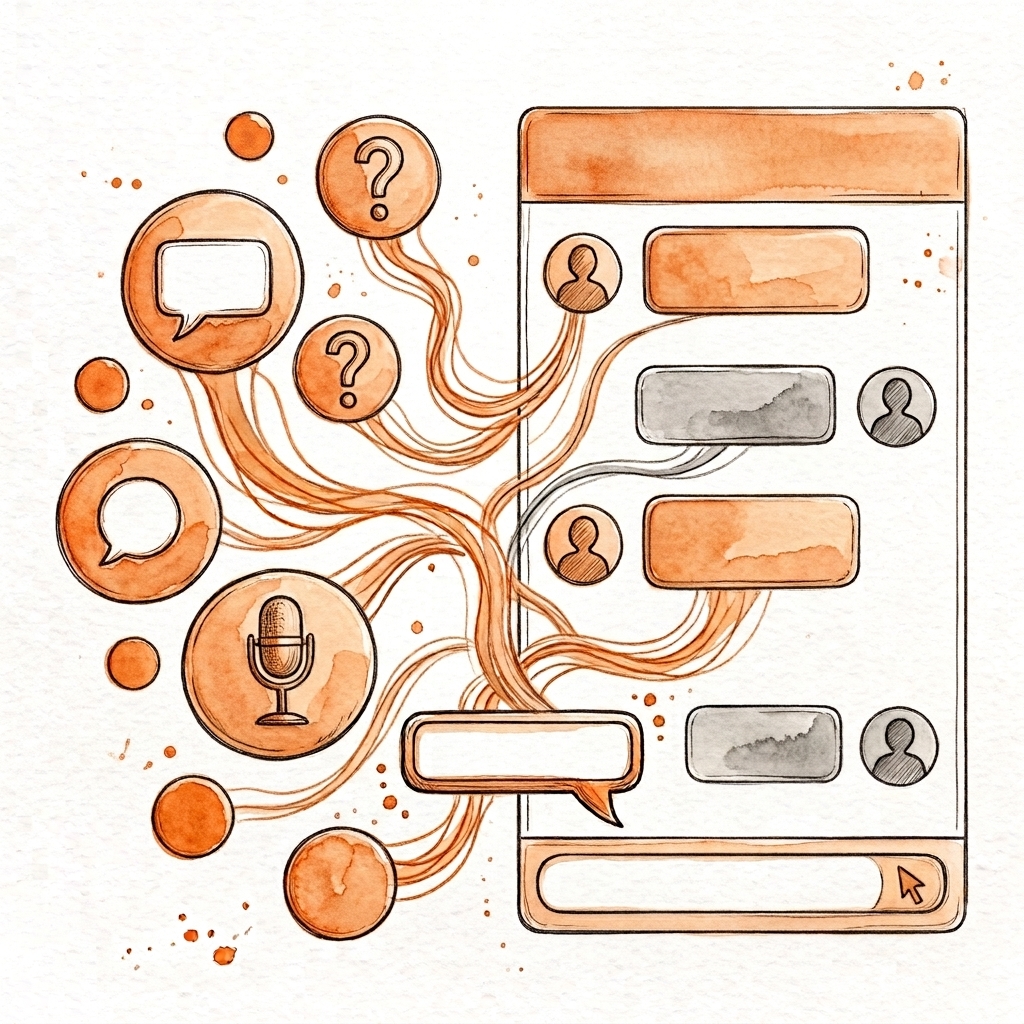
Escalations from every channel belong in one place, for a practical reason rather than a tidiness one. The person picking up the phone needs to see that this caller already tried the chat widget, and what happened there. Channel-siloed queues guarantee they will not.
The Card That Is Already Open
By the time the agent is notified and answers, the account should be on screen.
For a storage operation that means the unit, the gate code, the balance, and the escalation that needs resolving. Four things, and each does specific work.
The unit tells the agent which conversation this is before the caller finishes a sentence.
The gate code matters because a meaningful share of escalated calls are someone standing at a keypad. Hunting for it while they wait is the difference between a two minute call and a six minute one.
The balance determines what the agent is allowed to do. Access questions and payment questions are frequently the same question, and the agent needs to know that before answering.
The escalation reason sets the opening sentence. A caller who asked for a person and a caller who hit a policy boundary need different first lines. One is a service request. The other is a decision.
Two things belong alongside that card. What was already tried, so nobody repeats a failed path in front of the caller. And the conversation itself, summarized by default with the full transcript one click away, because the person picking up has seconds rather than minutes and a raw transcript with no summary is thorough and useless at the same time.
Notes That Keep Everyone on the Same Page
The second failure shows up on the second contact.
A tenant calls Tuesday, reaches a person, and gets a partial answer. They call back Thursday and reach someone else. If what the first person learned lives in that person's memory, the tenant explains it again, this time to an operation that already had the information.
Notes pinned to the account fix this and cost nothing. The test is whether somebody who has never spoken to this tenant can open the account and know what the last conversation established.
What This Looks Like in Practice
swivl answers first across voice, web, and text. The AI pulls the account, hears what the caller needs, and records the problem, then finds a live agent who can help. Escalations from all three channels land in one view.
The agent is notified in seconds, and the customer card is open when the handoff happens: unit, gate code, balance, and the escalation that needs resolving. Pinned notes keep every agent on the same page. Work that outlives the conversation becomes a ticket with the record and tasks attached.
The account stays live through the conversation, so a caller asking about a larger unit produces real availability and pricing rather than a promise to check, and a caller ready to settle a balance produces a payment link before the call ends. The guidance layer that sits on top of all this, including live scoring and manager visibility, is covered in AI coaching for storage teams.
Across 4,500+ self storage locations and more than 7.5M conversations, over 85% of those conversations are resolved without staff involvement. The handoff decides how the rest of them go.
.jpg)