Marketing
LLM SEO For Self-Storage: Best & Worst Strategies (2026)
What if everything you know about SEO becomes irrelevant in 18 months?
Last month, I spoke with a self-storage operator who'd spent years building his facility's website.
The content was solid. His rankings were strong.
He checked his traffic sources and noticed something strange…
Google was still sending visitors, but a new referral source had started climbing the charts: ChatGPT. And the pages getting those referrals weren't always the ones ranking well in traditional search.
"I don't even know how to optimize for this," he told me. "Do I just keep doing what I'm doing, or is there something different I should be doing?"
This is the question every operator is asking right now.
The truth is, Large Language Models (LLMs) like ChatGPT, Gemini, Claude, and Perplexity are fundamentally changing how prospective tenants find storage facilities. And if you're not paying attention, you're already behind competing facilities that are.
After reading this article, if you realize your facility needs to adapt its content strategy for this new reality, take that as your sign to book a demo of swivl and see how AI-powered communication can complement your visibility efforts. You’ll find out how swivl inadvertently helps your SEO shortly.
Google's AI Now Disregards Self-Claims About Your Facility
Here's something most operators don't realize yet.
Google's AI Overviews, AI Mode, and Gemini 3 have changed how they evaluate content from your facility's website.
They no longer treat what you say about yourself as reliable facts.
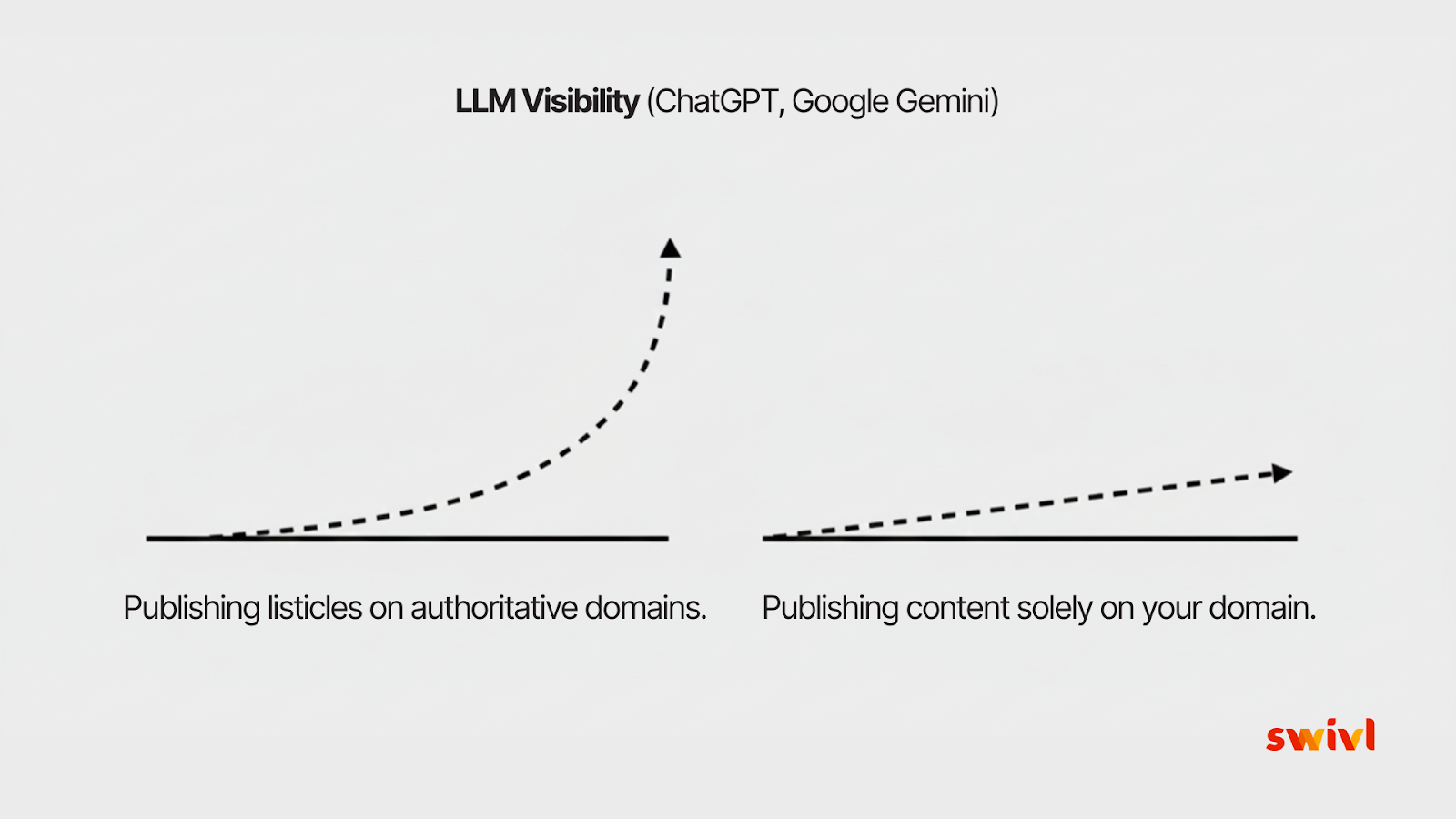
Instead, AI systems only accept claims when they're corroborated by independent, third-party sources.
Think about that for a moment.
You could write the most detailed page about why your facility is the best option in your city, but unless external sources back up those claims, AI systems will essentially ignore them.
What Signals Are LLMs Actually Looking For?
Based on recent research, including analysis of over 26,000 source URLs cited by ChatGPT, three main signals emerge:
Independent Authority Signals
Backlinks from high-authority sites with Domain Ratings (use Ahrefs or Semrush) above 70.
These are your PR mentions, guest articles, and editorial features on respected publications.
"Best Of" Listicles
Articles on external blogs that rank or compare storage facilities. Research shows that comparison lists represented 43.8% of all page types cited across software, products, and services categories. Self-storage won't be different.
Repeated Claims Across Sources
If several sources mention a claim, AI systems are far more likely to reference it. One mention isn't enough anymore. You need multiple independent voices saying the same thing.
Here's what this means in practice…
If your facility claims to be "the most secure storage option in [City]" on your website, that claim holds little weight unless local publications, review sites, or industry blogs have also mentioned your security features.
Why This Matters More Than You Think
Traditional SEO taught us to optimize our own pages. Write great content, target keywords, build some backlinks, and you'd rank.
LLM SEO requires a different mindset entirely.
You need other people talking about your facility, not just your facility talking about itself.
This is where many operators will struggle, because building third-party authority takes time, relationships, and a completely different content strategy.
Write "Best Storage Facilities" Listicles As Guest Posts
Recent data shows something fascinating about how LLMs source their recommendations.
When ChatGPT recommends storage facilities or any service provider, comparison articles are overwhelmingly the most common source cited.
Here's the strategic approach we're seeing work:
Step 1 - Choose High Authority Sites
Target websites with a Domain Rating of 70 or higher in your industry. These might include local business publications, real estate blogs, city lifestyle magazines, or moving and relocation websites.
The authority of the site matters significantly. Research analyzing ChatGPT citations found that while 35% of cited lists came from low-authority domains, the trend is moving toward higher standards as AI systems become more sophisticated at filtering quality sources.
Step 2 - Create Valuable "Best..." Listicles
Write genuinely helpful articles that address relevant topics in your niche. Some examples for self-storage:
- "Best Self-Storage Facilities for College Students in [City]"
- "Best Climate-Controlled Storage Options in [Region]"
- "Best Short-Term Storage Solutions for Moving"
- "Best Vehicle Storage Facilities in [Area]"
The key word here is "valuable." Don't just create a thinly-veiled advertisement.
Research from Ahrefs shows 79.1% of blog lists cited by ChatGPT were updated in 2025, with 26% updated in just the past two months. Freshness matters tremendously.
I recommend including genuine comparisons, real pros and cons, and actual recommendations that help readers make informed decisions.
Step 3 - Pitch & Publish As Guest Posts
Reach out with a personalized pitch. You should explain why your listicle would add value to their audience.
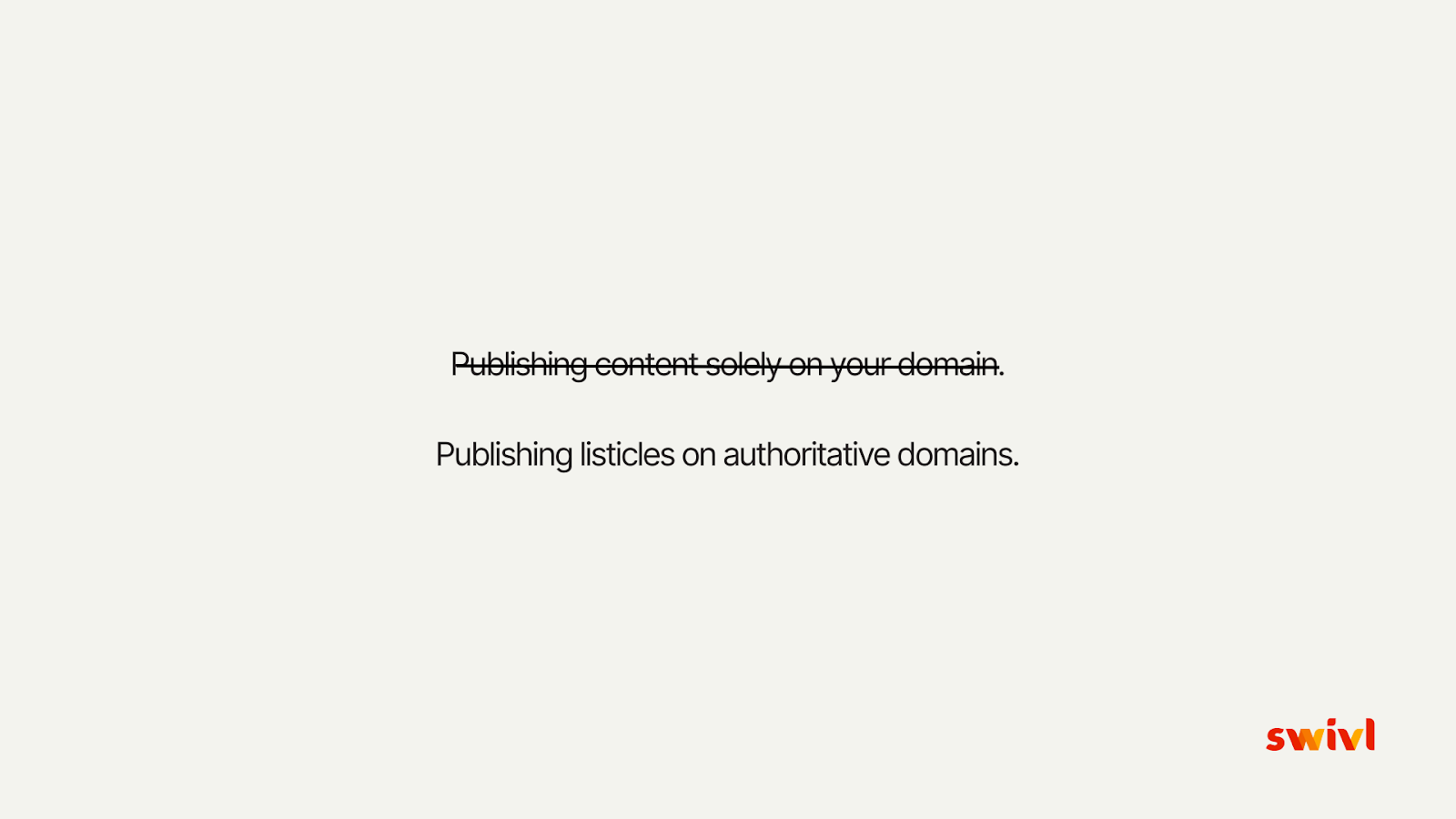
Guest post on these high-authority sites rather than only publishing comparison content on your own domain. Why? Because when AI systems evaluate recommendations, they heavily weight independent, third-party endorsements over self-promotional content.
Step 4 - Include Context & Backlinks
Within your guest article, naturally mention and link back to your facility as part of the comparison or claim.
For instance, if you're writing about climate-controlled storage, you might include context like: "Facilities such as [Your Facility Name] in downtown [City] offer temperature regulation between 55-85°F year-round, which helps protect sensitive items from humidity damage."
This creates the third-party validation that LLMs are specifically trained to recognize and prioritize.
The citation gives AI systems the independent confirmation they need to potentially reference your facility when answering related queries.
Getting Mentioned On Authoritative Websites Gives You Credibility
Why does this guest posting strategy work so effectively?
AI systems, particularly Google's, give greater weight to claims appearing in content published on trusted, high-authority domains.
Publishing comparison listicles yourself creates independent authority signals that multiply your facility's perceived trustworthiness.
Think of it this way: One claim on your own website is just marketing. The same claim validated by three external sources becomes a verifiable fact in the eyes of AI.
This is exactly how LLMs are trained to filter information. They look for consensus across multiple independent sources, not just what you say about yourself.
5 Worst LLM SEO Strategies (That Operators Keep Trying)
Not every approach works. In fact, some strategies can actively hurt your visibility.
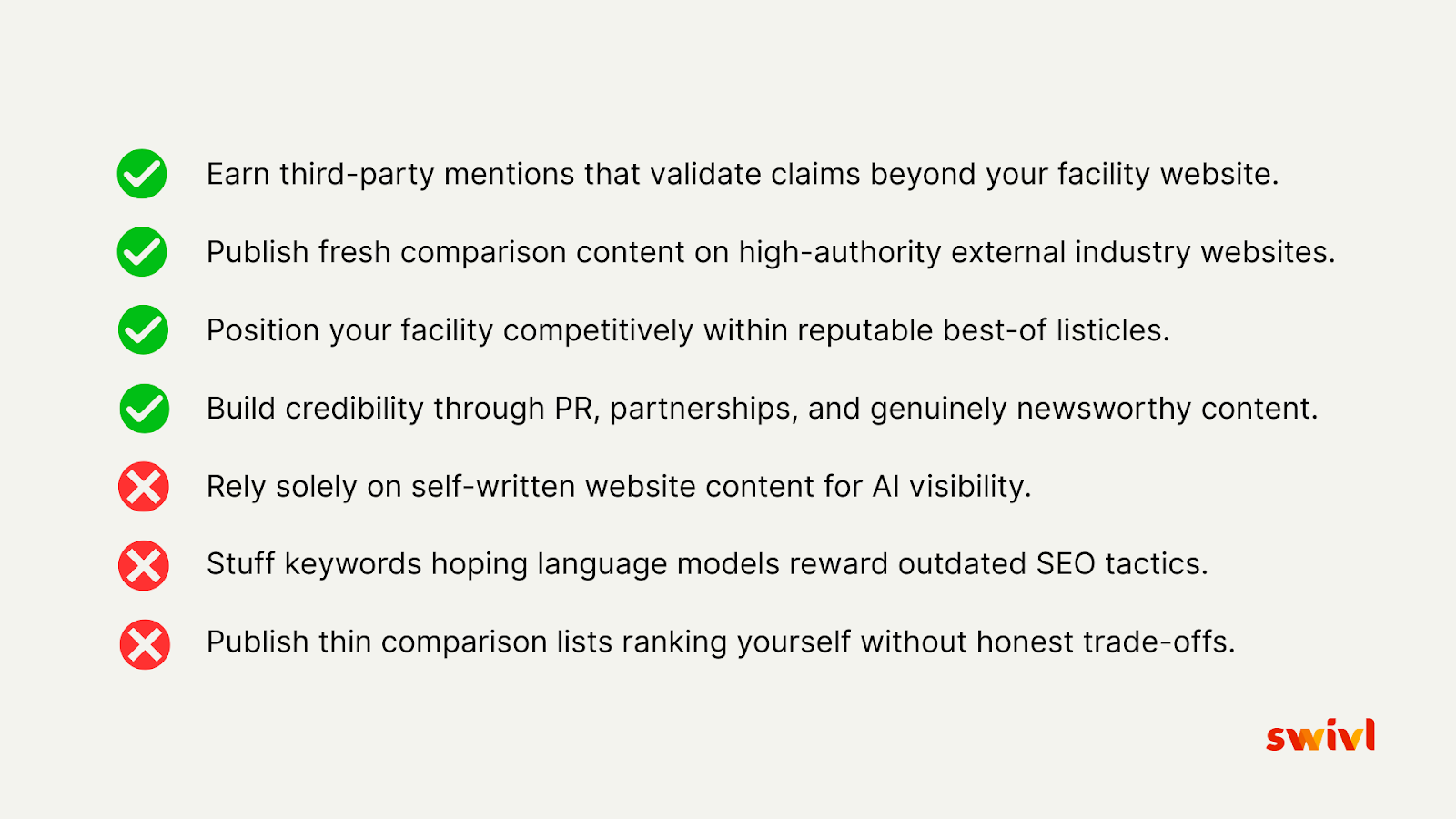
1 - Keyword Stuffing Your Website Content
Traditional keyword optimization still matters for Google, but LLMs read content differently.
They analyze natural language patterns, context, and genuine value rather than keyword density.
Stuffing your facility pages with phrases like "best storage facility" or "cheap storage units" repeatedly makes your content sound robotic and actually reduces the likelihood of citation.
LLMs trained on over 750,000 conversations, like swivl's AI, understand natural human communication patterns. Your website content should read the same way.
2 - Creating Low-Quality "Best Of" Lists On Your Own Site
Yes, self-promotional lists can work. Research shows 34% of first-party software mentions in ChatGPT included the company's own blog list.
However, these only work when they're genuinely valuable.
Many operators create thin listicles that rank themselves first without providing real comparisons or useful information. This approach is losing effectiveness as AI systems become better at identifying and filtering self-serving content.
If you do create comparison content on your own site, make it comprehensive, honest about trade-offs, and actually helpful to readers making real decisions.
3 - Ignoring Fresh Content Updates
Here's a stat that should grab your attention:
Here’s a stat I found that will grab your attention…
79.1% of blog lists cited by ChatGPT were updated in 2025.
Publishing content once and forgetting about it doesn't cut it anymore.
LLMs strongly favor recently updated content, which makes sense when you think about how quickly the self-storage industry changes.
Pricing shifts, new facilities open, features get added…
If your content hasn't been touched in two years, it's essentially invisible to AI systems looking for current, relevant information.
4 - Relying Only On Your Own Website
This is the biggest mistake we see operators make.
They optimize their own pages beautifully but never build external authority signals.
Without third-party validation, your facility essentially doesn't exist in the eyes of LLMs evaluating recommendations.
You need independent sources mentioning your facility, discussing your features, comparing your options, and validating your claims.
Your own website is just the starting point, not the complete strategy.
5 - Ignoring Where Rankings Actually Appear
Recent research revealed something interesting about how brands appear in "best of" lists.
When a storage facility or service provider gets recommended by ChatGPT, their position in associated third-party lists matters significantly.
Brands ranking in the top third of comparison articles were far more likely to receive AI recommendations than those buried at the bottom.
This means you can't just get mentioned anywhere in a listicle and call it done. You need to be positioned competitively, ideally in the top five recommendations.
What Forward-Thinking Operators Are Doing Instead
The facilities pulling ahead right now are building genuine authority through strategic content placement.
Here's what that looks like in practice:
Building Relationships With Local Publications
They're connecting with city magazines, business journals, and community blogs. These relationships lead to features, interviews, and mentions that carry significant weight.
Creating Genuinely Newsworthy Content
Rather than just publishing blog posts, they share data, conduct local research, and produce insights worth covering.
When you have something legitimately interesting to share, media outlets want to write about it.
You could create an “industry report” and publish this across several authoritative outlets.
From what we’ve seen, Google’s AI is receptive to using information from industry reports and other forms of content that demonstrate topical authority.
Celebrating Wins Publicly
When forward-thinking operators win awards, hit milestones, or achieve certifications, they announce it.
These achievements create opportunities for third-party coverage that builds authority signals.
Partnering With Complementary Services
Moving companies, real estate agents, college housing offices…
These partnerships often lead to recommendations and backlinks from trusted sources in adjacent industries.
Investing In PR Rather Than Just Ads
They're allocating budget toward earned media coverage instead of only paid advertising. A feature in a local publication does more for LLM visibility than another month of Google Ads.
What’s the common thread? These operators understand that visibility in AI-powered search requires building real credibility beyond their own websites.
Any Unconventional LLM SEO Strategies?
Yes! Here's where things get interesting for self-storage operators…
While you're working on external authority signals, your facility's actual service delivery needs to match the reputation you're building.
This is where swivl is going to help your team.
Modern tenants expect instant answers across every channel. When they land on your website at 11pm asking about unit availability, or text your facility on Sunday afternoon about pricing, those interactions shape perception.
If prospective tenants consistently get quick, accurate responses from your facility, that experience leads to positive reviews, social mentions, and word-of-mouth recommendations.
All of which feed back into those authority signals LLMs are looking for.
swivl's AI communication platform ensures tenants get immediate answers whether they reach out via website chat, phone, SMS, or email. The system is trained on over 750,000 self-storage conversations and integrates directly with your existing technology stack.
When your facility delivers consistently excellent experiences, tenants naturally talk about it. Those organic mentions contribute to the third-party validation that makes LLM visibility possible.
LLM visibility now depends on what others say about your facility. Book a demo of swivl to see how consistent, high-quality tenant interactions help generate the third-party signals AI systems care about.


.jpg)