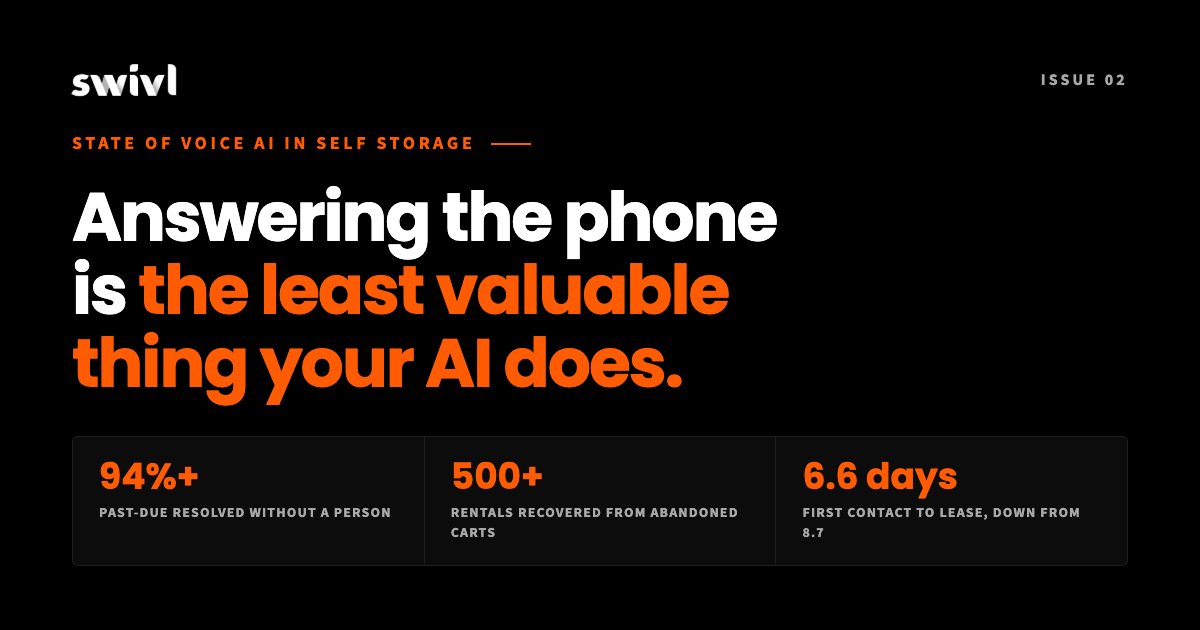
126,920 calls
that would have
gone unanswered.
After-hours. Overflow. Staff out. These are the calls with no human alternative. A representative sample of swivl operators. One quarter of data. This is what it shows.
Book A Demo→This quarter, 126,920 calls came into swivl across a representative sample of our operator network. Individual account data is anonymized; the numbers in this report reflect real call volume from real facilities, not projections. These were not random calls. They were the specific calls that needed a system to catch them: after-hours inquiries when the office was closed, overflow when staff were unavailable, collections outreach that would otherwise mean a manager burning a Tuesday morning on the phone. swivl handled them. That is more live Voice AI call data from real self storage operations than any other platform in the industry, and it tells us something important about where operators are actually getting value.
68% of every call that engaged the AI was resolved without a human involved. No voicemail. No callback queue. No missed lead. The tenant got what they needed and the call was done. For the 11,006 calls that came in after hours, that resolution rate is the entire story. Before swivl, those calls had one outcome: voicemail.
Self storage has always run on presence. The operators who are thriving right now are the ones who stopped trying to scale presence and started scaling systems. swivl is that system. This report shows you what it looks like in the numbers.
126,920 calls with no human alternative.
After-hours. Overflow. Short-staffed. These are the calls that fall through the cracks without Voice AI. This is a representative sample of the swivl operator network, Q1 2026.
2,683 hours. That is what AI containment looks like in real time.
The actual recorded talk time of AI-handled calls this quarter. 67 full work weeks. Not an estimate. Not a projection.
2,081 move-ins. Direct AI first touch.
First conversation was with swivl AI. Average time from that first contact to a signed lease: 8.7 days.
Three problems your team faces every single week.
Not features. Real daily operations that Voice AI is changing.
One thing the data is showing us.
The operators who turned swivl on in mid-2025 are not asking the same questions as the ones who started this quarter. They have moved past "does it work?" They are asking what else to automate. Which collections sequences to tighten. What their data is telling them about Q2 occupancy risk. That is a different operating mode.
The pattern is consistent. First 90 days: inbound coverage and after-hours. Days 90 to 180: collections and outbound sequences go live, and the data starts being used to make decisions. Month six and beyond: the platform is compounding. Configurations get tighter, containment rates climb, and the AI is learning patterns specific to that operator's tenants and facilities.
The operational system that handles customer communication, surfaces the right tasks, and acts on tenant behavior, automatically.
See it at your locations